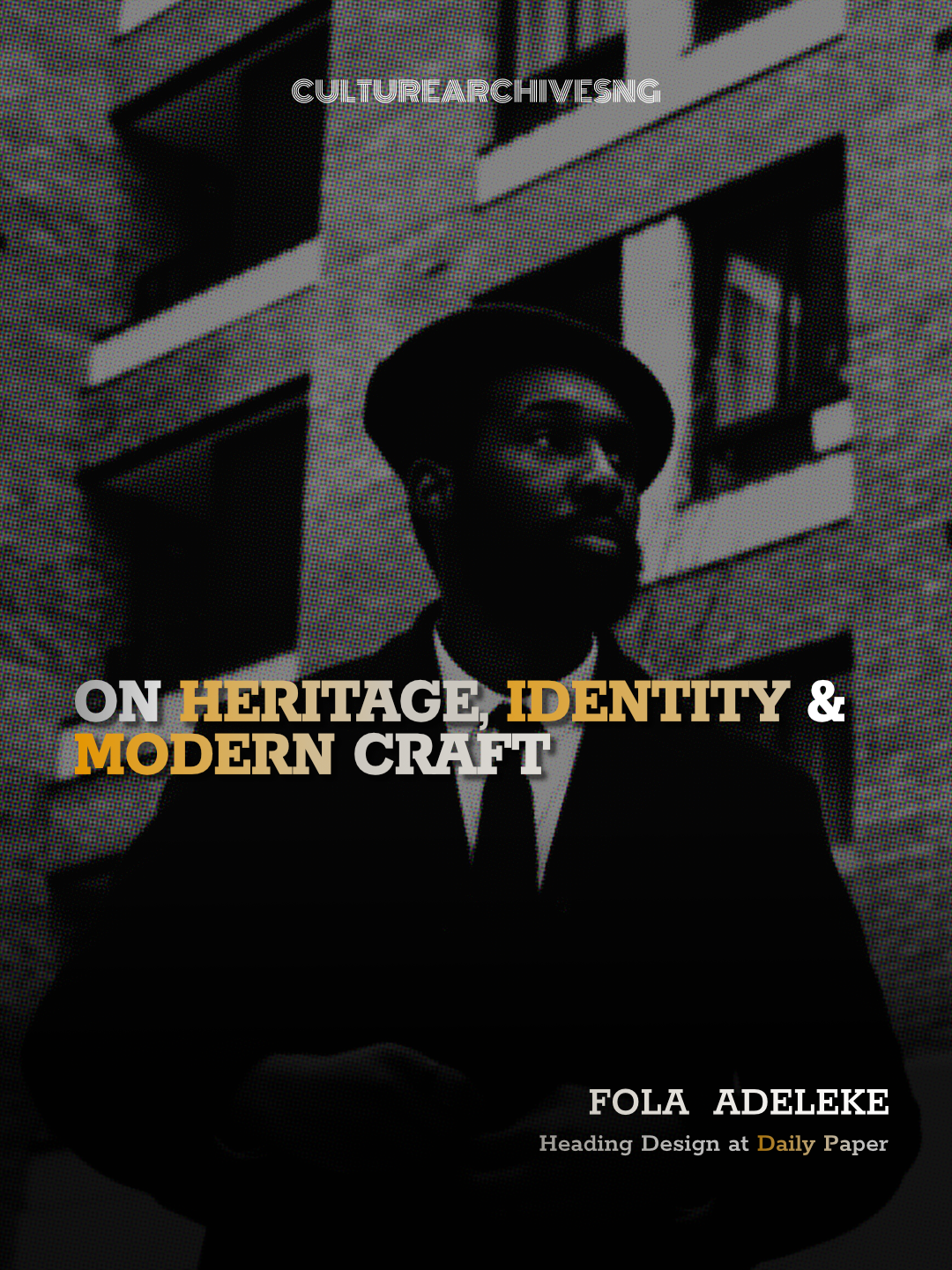
Fola Adeleke on Storytelling, Yoruba Cosmology & Reclaiming Craft
Head of Design at Daily Paper, Fola Adeleke explores heritage, identity, and the quiet erasure of African spiritual history through fashion. In this conversation with Culture Archives, he reflects on storytelling, Yoruba cosmology, and reclaiming African craftsmanship in today’s global design landscape.
Creativity has always been central to Fola Adeleke’s journey. Before fashion, there was sport — and a moment where he felt pressured to choose between the two. Growing up in a Nigerian single-parent household, practicality often overshadowed artistic pursuit. But fashion became the path — not simply for design, but for storytelling.
Today, while leading design at Daily Paper and continuing to develop personal conceptual work, Adeleke’s practice engages heritage, spirituality and historical memory.
Below, he speaks in his own words.
The Conversation
You’re currently heading design at Daily Paper while also developing personal conceptual work. How did your creative journey begin, and what shaped your design perspective early on?
Creativity has always been a part of me—just as it’s a part of all of us. There was a time, though, when I was excelling in sports and felt pressured to choose between athletics and the arts. Growing up as a first-generation child in a single-parent household with a Nigerian mother, neither path always seemed practical in her eyes “You better just focus on your books,” she would say.
In the end, I chose fashion design. It didn’t take long for me to realize that my greatest passion within fashion wasn’t just the design itself, but the storytelling behind it.
How has your heritage shaped the way you design and tell stories?
From a young age, I’ve felt that many African heritage stories have been replaced by religion. If we aren’t curious enough to ask questions, much of our history can go untold. This realization has inspired me to continually learn more about my heritage and thoughtfully weave it into my work
What drew you specifically to Yoruba cosmology for this series?
As a Nigerian from a Yoruba-speaking family, I’ve always been intrigued by the Yoruba religion. When I began researching it more deeply, I started to recognize traces of it in phrases my mother would casually say in passing conversations. It also brought back memories of moments when an aunt or uncle’s traditional last name was suddenly replaced with a Christian one—and I was told not to call them by their original name.
This has been happening for decades—over 40 years—and it still continues today. Family names that were once aligned with Yoruba religious traditions have often been changed as a declaration of faith in Christ. All of these experiences have drawn me closer to wanting to understand my history beyond the lens of colonialism.
You referenced the idea of “stolen African craftsmanship.” What does reclaiming or recontextualizing that narrative mean to you in today’s global fashion landscape?
We live in an era of full transparency, where information is accessible to everyone. With that in mind, we all recognize popular brands whose logos, symbols, patterns, and signature craftsmanship methods are rooted in African tribal traditions. The storytelling in my work is a way of shining a light on the origins of these elements and honouring where they truly come from.
Through both his role at Daily Paper and his independent conceptual work, Fola Adeleke continues to examine how design can restore memory — not by replicating tradition, but by understanding its symbolism, context and historical weight.
From the Archive
CulturearchivesNG


